Queen
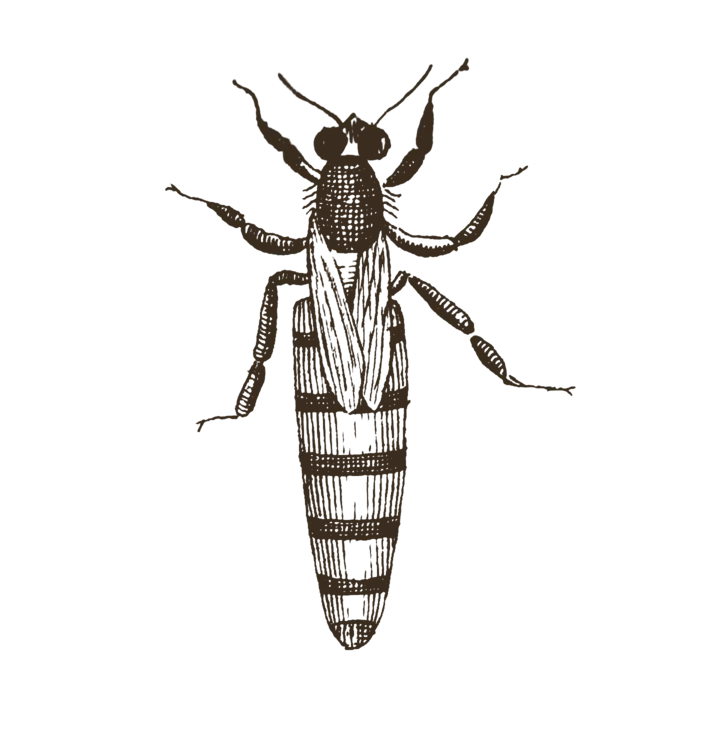
- In a normal colony, only the queen lays eggs.
- She can lay up to 1,500 eggs in one day.
- A queen can live for several years.
- She does not die when she stings.
Learn
Follow one honey bee through its life, from a tiny egg to the flowers.
Turn it, tap it, and look inside.
Worker honey bee Apis mellifera Workers are 10 to 15 millimeters long.
Day 0 to 21
Bees build comb, a wall of small wax cells.
Every worker starts as one egg in one of those cells.
Drag the slider to watch it grow, day by day.
Drag the slider to watch it grow, day by day.
Day 0: Egg.
Day 0. The queen lays one egg in each cell. It looks like a tiny grain of rice. It stands up at first, then leans over.
A queen grows faster. She takes about 16 days from egg to adult.
Day 21
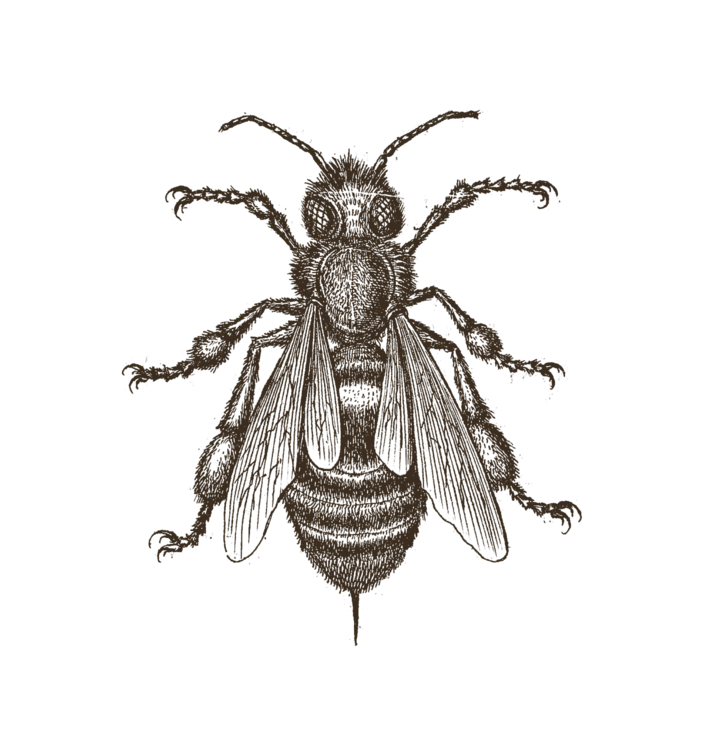
A new worker has three body parts: a head, a thorax, and an abdomen.
Bees eat nectar, a sweet juice, and pollen, a dust from flowers.
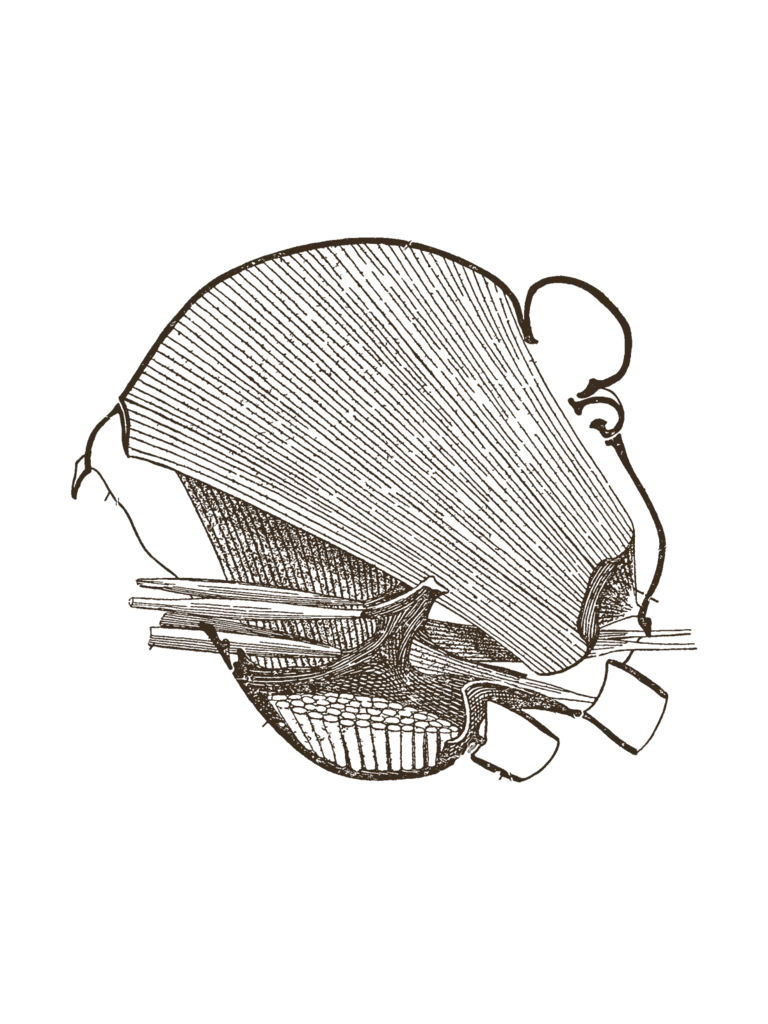
Tap a number to read about that part. Choose Inside to see the parts inside its body.
Choose a part from the list or tap a number on the bee.
Choose a part from the list or tap a number on the bee.
The head holds the eyes, the antennae, and the mouthparts.
The thorax is the middle of the body. All six legs and all four wings attach to it.
The abdomen is the back part of the body. It holds most of the gut, the venom sac, and the stinger. A narrow waist joins it to the thorax.
First weeks
A young worker does not fly out right away. For its first few weeks, it works inside the hive.
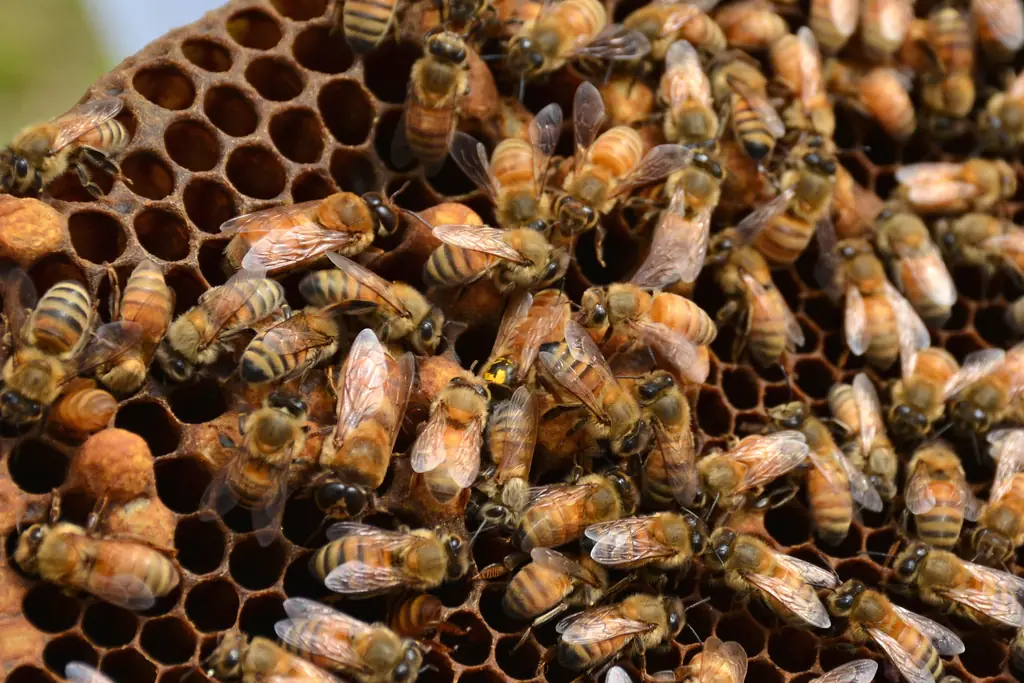
A colony has three kinds of bee: a queen, workers, and drones.
Later
Later, the worker becomes a forager. It flies out to collect nectar, pollen, and water.
Bees visit flowers for food. Nectar gives a bee energy. Pollen gives it protein, fats, vitamins, and minerals.
While a bee feeds, pollen sticks to its body. Then the pollen moves to the next flower.
We call it pollination when pollen moves to another flower of the same kind. Many bees visit only a few kinds of flowers at a time.
7 in 8
Animals such as bees pollinate about flowering plants.
3 in 4
food crops depend, at least in part, on pollinators.
Flowers pollinated: 0
A game for kindergarten and grade 1.
Back home
Back home, the forager can dance on the comb. The dance tells other bees where the food is.
Drag the flowers around the hive.
The run points 90 degrees to the right of straight up. The flowers are near, so the run is short.
Honeys run from almost clear to nearly black. Tap a mark to read about one.
Bees make this honey from the nectar of black locust trees.
Color: Water white
Read about Acacia honeyAbout 6 weeks
In summer, a worker lives about 6 weeks.
Around the world, bees are under pressure. Here are five big reasons.
Bees lose the land where they feed and nest. What is left breaks into small pieces.
Big farms grow one crop across huge fields, instead of many kinds of plants.
People use more pesticides as farmland grows. Pesticides are chemicals that kill pests.
Pests and diseases make bees weak, in hives and in the wild.
Heat waves and changes in when flowers bloom break the link between flowers and bees.
Over 20,000 kinds of wild bees live around the world.
Your turn
You followed a bee through its life. Here is where to go next.
Real data with its sources, and practice for new beekeepers.